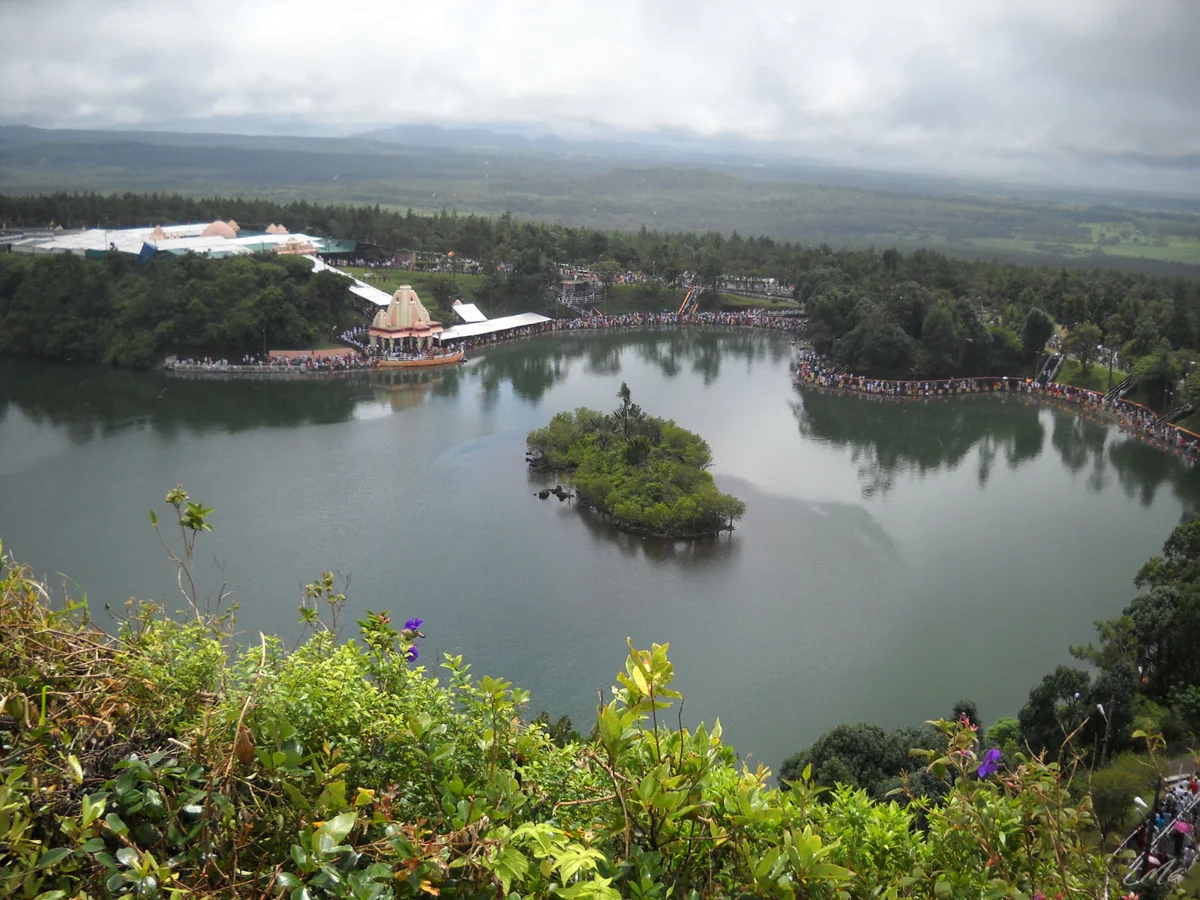
Ganga Talao, also called Grand Bassin, is a place to visit thoughtfully, not simply another photograph between beach stops. A car gives you control over the journey from your accommodation, but the lake and temples are places of worship with their own rhythms. Plan the arrival, the time on foot and the return as separate parts of the day. This guide helps you choose a sensible rental arrangement and organise a focused inland outing without promising unrestricted temple access, empty parking or a fixed driving time from every part of Mauritius.
Understand the destination before planning the drive
The Mauritius Tourism Promotion Authority identifies Grand Bassin as a crater lake in the Savanne district and an important Hindu sacred place. The two names describe the same destination. They do not identify two separate attractions that require separate drives. When sharing your itinerary with a driver, accommodation host or rental supplier, use both names to avoid confusion with similarly named places elsewhere.
The Hindu Maha Sabha describes its care for the temples, precinct and pilgrims at Grand Bassin. That is a useful reminder that a visitor itinerary should fit the religious setting. An attractive photograph of an empty lakeside does not establish the conditions on your date, and a general map listing does not grant permission to enter every building or ceremony.
Choose the reason for your visit before allocating the rest of the day. Some travellers want a quiet view of the lake; others want to learn about the temples with an appropriate guide. Those are different experiences. Neither should depend on a promise that a particular ritual, guide or indoor space will be available when you arrive.
Start with the accommodation, not an island-wide journey estimate
A departure from Grand Baie, Port Louis, Flic en Flac or an inland address creates a different driving day. Save the exact accommodation entrance and intended destination, then inspect a current route for your departure time. A broad island distance or a touring company's schedule is not a reliable door-to-door estimate for your own hotel and rental collection arrangements.
Allow separately for collecting the car, loading, a comfort stop, parking and walking. Navigation generally estimates a driving journey; it does not complete the rental paperwork or get everyone ready to leave. A late handover can remove the margin that made an ambitious itinerary appear possible. Keep the main visit useful even if you depart later than planned.
If you are staying in the capital, compare this excursion with the practical arrangements in our Port Louis guide. Confirm whether the accommodation has parking and where a rental handover can take place. Do not assume that a city address means a supplier can stop outside the entrance at any time.
Decide whether one rental day is enough
Use the Mauritius car rental catalogue to compare cars for the actual dates, pickup point and driver. Vrenty Car provides affiliate information; Localrent handles the reservation and the selected rental company supplies the vehicle. This destination article does not establish a staffed rental office at Grand Bassin or a guaranteed delivery service to your accommodation.
For a single inland outing, compare the complete cost of a short rental with a driver or an organised visit. Include collection, delivery, parking arrangements at your base and the agreed return time. A low daily price is not the full comparison when a handover consumes part of the morning or an accommodation transfer is needed first.
A longer rental can make sense when you have several independent journeys, but do not extend it merely to fill an itinerary. Compare the actual total for both durations and the hours during which you can receive and return the vehicle. Keep a written confirmation of any revised location rather than relying on a general website statement about flexible collection.
Choose a car for the passengers and the agreed roads
Start with passenger numbers, luggage and the drivers who will be named on the agreement. A vehicle suitable for two adults travelling without suitcases may not suit a family arriving directly from the airport. Check the luggage space and any child-seat arrangement before booking; a category photograph is not proof that a particular bag or seat will fit.
An inland excursion is not, by itself, a reason to buy a four-wheel-drive upgrade. What matters is the condition and permitted use of the route you intend to take, plus the actual rental terms. Conversely, a larger vehicle does not authorise driving on an unpaved shortcut, entering a restricted approach or ignoring a supplier's road limitations.
If you prefer an automatic, confirm that specification in the selected offer. Take time at collection to understand the controls before moving away. Familiarity with the vehicle, a suitable seat position and a route you can follow calmly are more useful than choosing a bigger category solely because the destination is inland.
Check worship and access arrangements for the actual date
Ask about the current visitor arrangements before making the drive the centrepiece of a tightly scheduled day. Confirm whether the areas you hope to see are accessible and whether an event changes the approach or parking. We do not publish a universal opening time or promise that all parts of the precinct share one visitor schedule.
A pilgrimage period needs its own travel plan. Large gatherings and people approaching on foot can change how a driver should organise the journey, even when the lake itself remains the destination. Follow current instructions from the site and authorities. Do not reuse last year's traffic diagram as though its dates, access points and parking arrangements automatically apply again.
If your interest is religious participation rather than sightseeing, contact the appropriate organisers about that activity. Rental confirmation does not reserve a ritual, admission slot or guide. Keeping those arrangements separate avoids treating a car booking as proof that the experience you want has also been arranged.
Keep parking separate from temple access
Set a suitable arrival point for vehicles rather than navigating blindly to a lakeside photograph or temple label. On arrival, follow the current signs and directions, then park only where permitted. A space visible in an archival photograph may now have a different use. An apparently empty area is not necessarily public parking or an appropriate place to leave a rental.
Once parked, note the location and take the belongings needed for the visit. Keep valuables with you and leave the car secured according to the supplier's instructions. Avoid unloading into a pedestrian route or blocking another vehicle while reorganising the day. Give the driver time to finish parking before the group starts exploring.
For a traveller who cannot walk far, establish the distance and surface between a permitted drop-off, parking and the intended visitor area in advance. Do not infer step-free access from a large car park. Ask specifically about the route you need and decide whether it works for your group before committing to a long outing.
Make the time on foot respectful and comfortable
Dress with the religious setting in mind and follow instructions about shoes, photography and entry to particular areas. Ask when unsure. A general invitation to visit does not mean that worshippers or ceremonies are available as photographic subjects. Keep conversations and group movements considerate, especially around people who are there for prayer rather than sightseeing.
Bring the practical items that make a short walk comfortable: drinking water, an appropriate layer and footwear suitable for the conditions. Keep anything needed after removing shoes easy to carry. Do not leave all your weather protection in the car because the journey began in sunshine at a coastal hotel.
Agree a meeting point before separating, particularly if some people want to spend longer at the lake and others need a rest. The parked car can be a fallback meeting location, but it should not become a reason to hurry someone through worship or leave a passenger waiting without a clear return arrangement.
Use weather to decide the size of the outing
Check current conditions for the inland destination as well as the accommodation area. A pleasant beach morning does not establish the visibility or surface conditions later in the journey. If rain or poor visibility makes the drive uncomfortable, reduce the plan or postpone. A rental day is not a requirement to complete every destination written down the night before.
Keep any scenic stop optional and use a designated, lawful stopping place. Do not pull over abruptly because a view appears between bends or because a passenger wants a photograph. If you miss a suitable stopping point, continue to a safe place instead of reversing or improvising a manoeuvre that other road users cannot anticipate.
Budget daylight for the return if you prefer not to drive an unfamiliar route after dark. Work backwards from the accommodation or agreed handback time, allowing for walking back to the car and an ordinary break. This is a planning margin, not a claim that a particular route always takes a fixed number of minutes.
Add one compatible visit, not an entire island circuit
A second destination should earn its place by matching your interests and available time. For another inland outing, read the separate Curepipe and Trou aux Cerfs guide. Compare the two visits before deciding to combine them. A shared inland location does not remove the time needed to park, walk, eat and return.
For a nature-focused day, our Black River Gorges guide explains why the car journey and activity on foot need separate planning. A viewpoint stop and a longer walk are not interchangeable additions. Do not insert a hike into the remaining time merely because a map displays a nearby place name.
Keep Chamarel, a coastal stop or another paid attraction as an alternative when the schedule no longer supports both. Choosing one satisfying visit can be better than reaching several entrances close to closing. Any attraction booking has its own conditions, and losing time at the first stop does not automatically change the next operator's admission rules.
Separate the rental budget from spending at the destination
For the car, compare the rental total, any delivery charge, fuel arrangement, deposit and the payment methods for each stage. An online advance payment and the balance at collection can have different requirements. No deposit does not mean no advance payment, no responsibility for damage or no need to meet the supplier's documentation conditions.
For the visit, keep a separate allowance for food, optional guiding and any other activity you actually arrange. This guide does not promise a universal entry charge, free parking or a particular payment method across the whole precinct. Confirm individual costs where relevant and do not mistake an optional donation for a rental or admission requirement.
Keep the booking voucher and supplier contact details available without depending entirely on a live browser session. If you change the trip, the rental agreement still governs the vehicle. An informal decision to stay out longer should become an approved extension before the agreed return time, not an assumption that a quiet road means a late handback is acceptable.
Return with enough time for the handover
Before leaving Grand Bassin, check the route back to the actual return point. That may be different from the accommodation or airport entrance. Allow time for the agreed fuel level, unloading and the supplier's inspection procedure. Keep relevant receipts and records rather than relying on memory at the end of a full day.
If the rental continues, park at the accommodation in the agreed place and keep the next day's departure realistic. If it ends, confirm who receives the car and keys. Do not leave them with a hotel employee or at an unattended location unless the supplier has explicitly approved that arrangement.
The best outcome is not the longest possible route. It is a visit that respects the setting, suits the passengers and ends with an unhurried return. Let the lake be the purpose of the outing, use the car to make that visit practical, and leave enough flexibility to respond to the conditions you actually find.
Questions & answers
Are Ganga Talao and Grand Bassin different places?
They are two names for the same sacred lake destination in Mauritius. Use both when confirming directions or discussing your itinerary.
Does this guide guarantee temple opening times or parking?
No. Confirm current visitor and vehicle arrangements, particularly around religious events. Follow the instructions in place on your date.
Should I combine the lake with several other attractions?
Only after allowing for the real departure point, parking, walking and return. Choose one priority visit and make any second stop optional.